
Audio By Carbonatix
Soon after Jose Rosales began attending the prestigious Ballet Folklórico de México de Amalia Hernández in 2014, he fell in love.
Not just with Mexico City – the home of the world-renowned dance hall where he studied the iconic style of the “Queen of Mexican Folklore,” Amalia Hernández – but with his future husband, Alfonso Meraza, who was a member of the Ballet Folklórico de México for ten years. Rosales became the first U.S.-born principal soloist for Ballet Folklórico.
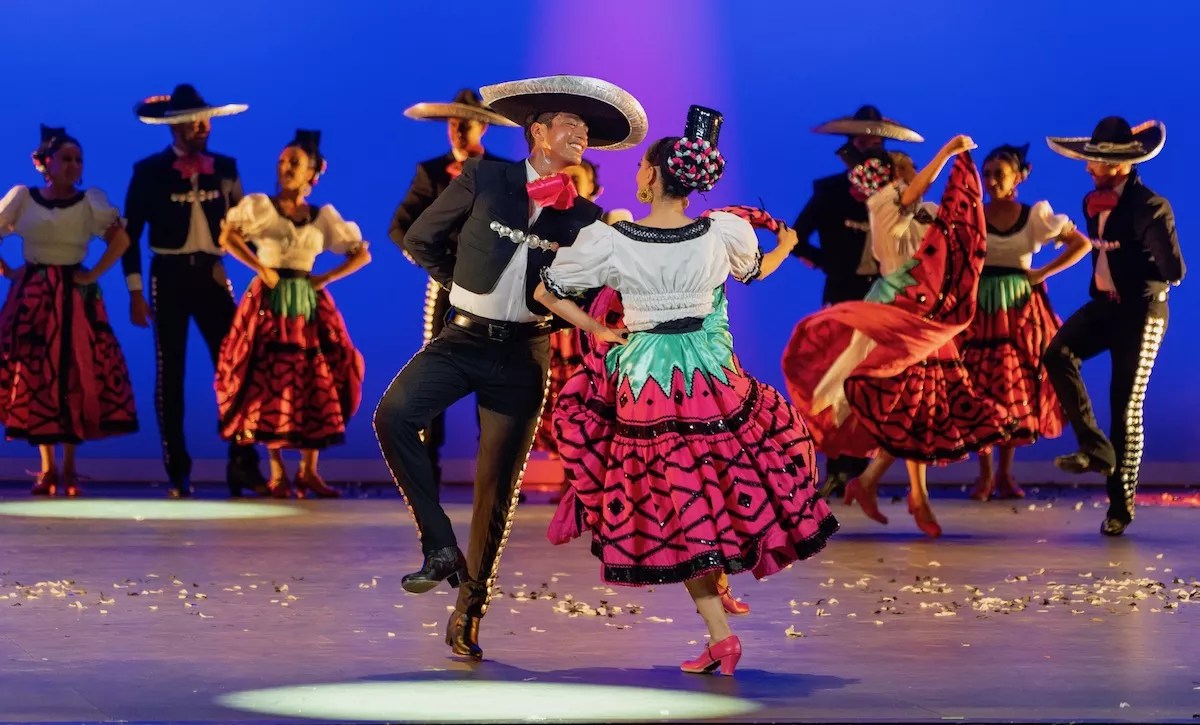
Three years ago, he and Meraza moved to Denver, where Rosales was born and raised. Together they founded ArtistiCO Dance Company, which Rosales describes as a “pipeline for young dancers” that’s dedicated to inclusive values. Inspired by the legendary Mexican ballet choreographer, they created Amalia – ¡Viva México!, an ArtistiCO show that celebrates the late icon’s work and the influence she had over their lives and careers.
There’s just one problem: Amalia Hernández’s family wants nothing to do with the production.
When news happens, Westword is there —
Your support strengthens our coverage.
We’re aiming to raise $50,000 by December 31, so we can continue covering what matters most to this community. If Westword matters to you, please take action and contribute today, so when news happens, our reporters can be there.
“We have never given license, we have never given our support,” says Salvador López, the director general at Ballet Folklorico and grandson of Hernández. “The worst part is that they’re trying to copy the work, the costumes, the scenography. They’re copying everything, and they’re copying it poorly and they don’t ask for permission – they don’t tell us about it. They’re doing it, it seems to me, solely with the goal of making money.”
After being threatened by López with a lawsuit for trademark infringement, ArtistiCO finally changed the name of Amalia – ¡Viva México! to simply ¡Viva México!.
Since May, ArtistiCo had been selling tickets to a September 9 show at the Ellie Caulkins Theatre under the original name, billing it as “a dance journey through the colorful regions of Mexico” and a showcase of “more than 50 international dance artists and musicians.”
While the production features a variety of styles, Rosales says ArtistiCO chose to include the Amalia name in the title because he and Meraza wanted to highlight her technique and pay tribute to her legacy – not make money off her.
“We studied there [at Ballet Folklórico]. My husband was there for ten years, I was there for five,” Rosales says. “Our career is really surrounded with that technique – Amalia is technique now, it’s not just a company. … It’s kind of our way of introducing folks to the culture.”
Still, on August 9, Rosales and Meraza made the difficult decision to change the title of the show. “We just want to avoid any misunderstanding,” Rosales says. “We respect the ballet and Amalia Hernández. And our gala will still be that day, just with a different name. Although the name Amalia is common, we just want to move forward with our event on a positive note.”
ArtistiCO put on a similar show last year, but without the drama.
According to López, his former students’ production violated a trademark on the music, choreography and name of Amalia Hernández. In particular, he argues that using the name Amalia in the title would “spread confusion in the attendant public and in the media.”
But Rosales insists that ¡Viva México! will only celebrate the legendary choreography. “We’re creating a whole new show with what we call the Amalia technique, the mixture of using technical, classical, modern, contemporary dance with folklórico,” Rosales says. “It’s kind of our way of introducing what we’re doing as a company versus just copying – as they’re claiming – what they’re doing at Ballet [Folklórico].”

Salvador López, the director of Ballet Folklórico de México de Amalia Hernández, charges that a Denver concert is violating trademark rights he has over the name and work of his grandmother, Amalia Hernández.
Courtesy of Ballet Folklórico de México de Amalia Hernández
“We still have not been informed about anything yet,” says Ballet Folklórico spokesperson Laura Becerril.”We hope they don’t use the work of Amalia at the event, but to that effect, our legal representative will be watching the event.”
In Mexico, folklórico refers to a genre of performances that emphasize the ancestral dances of the country’s modern history and its Indigenous, pre-Columbian past by using traditional costumes and elaborate choreography. The genre began gaining popularity nationally and then internationally in the 1950s through the work of Hernández.
In 1952, she opened her famed Ballet Folklórico with just eight dancers. She was celebrated for her ballets that depicted reconstructions of Aztec, Mayan and even Yaqui ceremonies, as well as scenes from Mexican history.
She started performing for weekly television broadcasts in 1954 that aired across Latin America on a program named Función de Gala. The Mexican government began sponsoring world tours of her ballet troupe that same year, and Ballet Folklórico de México continues to perform similar tours to spotlight the unique style she pioneered.
By 1959, Hernández’s dance hall was named by the Mexican government as the official cultural representative of the country, a title it still holds more than six decades later, after Hernández and her troupe performed at the Pan American Games. In the 1960s, she held a private performance at the White House for John F. Kennedy and his wife. In 2017, Google created a doodle to celebrate her 100th birthday.
Hernández’s dance hall and academy now sit around the corner from Plaza Garibaldi and the Palacio de Bellas Artes in one of the most recognized parts of Mexico City.
“This is an institution that has 600 people, among them 300 students, plus teachers, etc., and one that has presented in the Palacio de Bellas Artes for 64 years,” López says. “When a company like the one in this specific case, the group presenting in Denver that, first of all, uses the name Amalia, and, from my point of view, confuses and spreads the false idea that our ballet is supporting this or is presenting a ballet there, it’s something that I forcefully disapprove of.”
Rosales says that ArtistiCO put on the first Amalia – ¡Viva México! in 2022 because “a lot of folks here in Denver and in Colorado, they don’t know who Amalia Hernández is.” He and Meraza thought the show would be a great way to change that.
“We know who she is because we’re in the folk community, but a lot of people don’t know who she is. It was kind of our way of introducing folks to the culture,” Rosales says. “We’re paying tribute not through the dances that we learned there, but the concert as a whole is our way of thanking Amalia Hernández.”
Rosales says he has a rocky past with López and claims the accusation of plagiarism is “a personal attack.” The two haven’t talked since 2021, when Rosales attempted to wrap up his career as a dancer with a Ballet Folklórico tour in Dubai, parts of Latin America and in the U.S.
At the time, Ballet Folklórico was short of dancers who could travel because the COVID pandemic had caused a delay in visas being issued. Rosales was available because he had his U.S. passport, but he was recovering from a ruptured Achilles heel.
“I felt the need to go and live and show myself that I could get back up after such a detrimental injury,” Rosales says. “It’s one of the worst injuries you can have as an athlete, and I just felt it was a good way to close that part of my life.”
When he arrived in Mexico City, Rosales was received by López and Viviana Basanta, the daughter of Hernández and the artistic director for Ballet Folklórico. López made him sign a document right away that said Rosales wouldn’t sue if any accident had happened, according to Rosales.

Jose Rosales sits in the front right during a performance for the Ballet Folklórico de México de Amalia Hernández in Mexico City.
Courtesy of Jose Rosales
However, López kept Rosales from finishing the tour after friends of Rosales and fellow Ballet Folklórico dancers sued López for the way he treated and compensated his dancers. Since then, Rosales hadn’t heard from either López or Basanta until a few weeks ago, when Basanta emailed him with the accusation that he was stealing the name and style that belong to Ballet Folklórico.
Basanta also tried to confront him through comments on Facebook “with little professionalism,” Rosales says. “It’s not healthy. That’s not a healthy way of doing things,” he charges.
Rosales wound up blocking Basanta on Facebook to avoid her. “They still have a scare tactic that they would use, that they would use for their dancers, and they’re trying to use that again now,” he says. “It’s unfortunate, because we’re having to defend ourselves and as a company that is pretty much doing what we were taught.”
As for López, Rosales says that “he hasn’t even reached out to me or even asked what we’re doing” with the upcoming program. “I think he’s just implying that we’re doing the same show based on the marketing we have,” he adds.
Invites have been sent to both López and Basantes to see the show and to “offer them recognition for what they’re doing in keeping this legacy alive,” Rosales says.
Aware that his grandmother’s name was being used across the world, López started working with a company in New York a couple of years ago to find and investigate dancers who might be infringing on the trademark he has over Amalia’s name and style.
“It was through that initiative that we found this event,” López says. “I’ve undertaken the task of doing an analysis of everything that has happened with all the groups that have copied or been inspired by or have tried to emulate Amalia’s work. To give you an idea, there are 400 groups inspired by the Ballet Folklórico de Mexico just in the area of Los Angeles, but there are other groups of people and organizations that try to copy the work of Amalia.”
No stranger to lawyers and not afraid of borders, López took a German dance company to court almost a decade ago and won because they used “the complete name of the ballet,” he says.
“Now I’m taking the initiative to review all these companies and groups, organizations or people who are misusing the name and work of Amalia,” López tells Westword. “It’s not worth it to copy a work that is registered, and less so a work that is part of Mexico’s heritage. That kind of misuse is impermissible.”

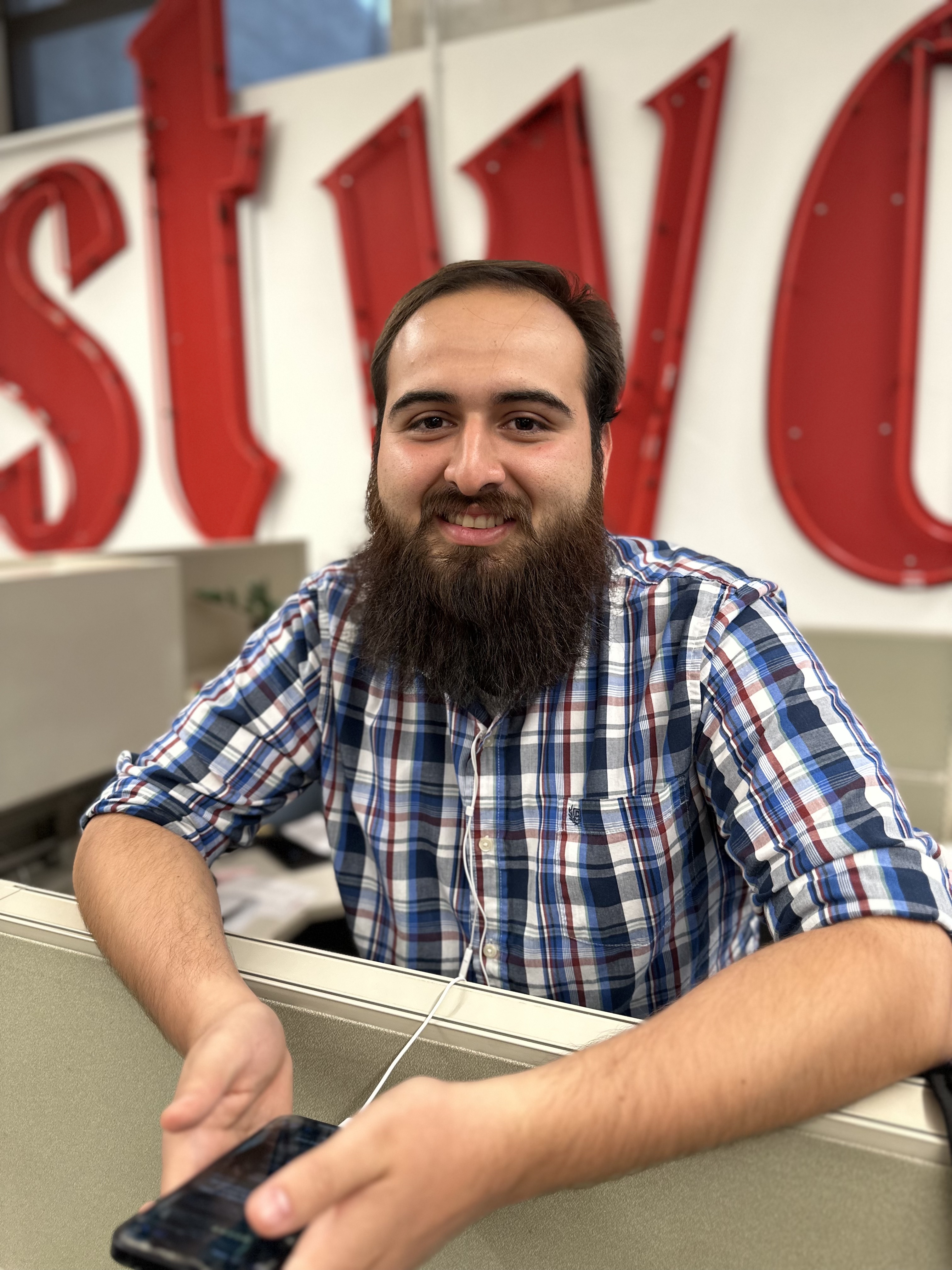
Jose Rosales is defending his reputation after his former director, Salvador López, accused him of stealing trademarked material. He’s already changed the name of an upcoming gala in response.
ArtistiCO
His goal isn’t to drag everyone who uses the name or style of Amalia into court, López says, but rather to protect “the artistic quality and the work that is representing Amalia. It’s not an issue of money, it’s an issue of respect for an institution that has for seventy years been spreading the culture of Mexico around the world.
“This isn’t an isolated case,” he adds. “There are cases in many places, unfortunately. They use videos of the ballet for promotion, or videos recorded in Palacio de Bellas Artes. It’s a lack of respect.”
Rosales, meanwhile, describes López as “a difficult person” and “aggressive” to the point of fostering a “toxic environment” in his dance hall. “At the Ballet Folklórico, they would say, ‘We cut off heads,'” Rosales says. “And they would remind us that there was a long line of people waiting for our spots.
“They feel like they’re the owners of folklore culture – of folklórico dance – because of the iconic Amalia Hernández and what she’s done in building this form of dance,” he continues. “[Lopez] and I have never really got along, because I would always question the way he would treat his dancers, the way he would pay his dancers, the way he was running his company, the way he would exploit us on tours.”
Before Hernández died in 2000, she knew her revolutionary techniques had been copied the world over by troupes seeking to replicate the pageantry and authentic style of her dance hall.
“I am the mother of thousands,” she told the Los Angeles Times in 1991, when she brought her troupe to San Diego. “You have to be important to be copied.”
“She’s the mother of thousands of students and thousands of teachers,” Rosales concludes. “That was always her wish: Teach us how to dance and teach us how to promote the culture and then let us go and fly. It’s unfortunate that her grandchild and her daughter don’t understand that.”